Image-guided Radiation Therapy (IGRT)
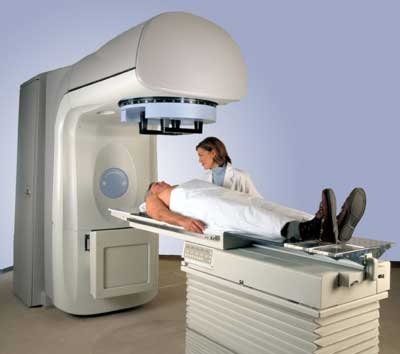
Image-guided radiation therapy (IGRT) uses medical imaging to help provide precise and accurate radiation treatment. It can also be used to treat tumors in areas that move, such as the lungs. Your doctor will use the IGRT tool to scan the area being treated prior to treatment delivery. These images will help your doctor set your position and target the radiation to your tumor.
Some IGRT procedures use special methods, such as fiducial markers or special techniques such as 4D gating, to help further align and target the area during radiation treatment. They may also use special devices to help you hold the same exact position during each treatment.
Your doctor will conduct a simulation session and use CT scanning to create reference images before you begin treatment. You may also have MRI or PET scans to help define the shape and location of your tumor. Your doctor will tell you how to prepare.
What is Image-Guided Radiation Therapy and how is it used?
Image-guided radiation therapy (IGRT) uses medical imaging to help provide precise and accurate radiation treatment.
IGRT uses a linear accelerator or cyclotron/synchrotron to produce and deliver radiation therapy. These machines may also have imaging technology to scan the tumor before or during treatment. Your doctor and radiation therapists will compare these scans to the simulation reference images and make adjustments. By adjusting your position and the radiation beams, your doctor and treatment team can more precisely deliver radiation to the tumor while avoiding healthy tissue.
IGRT may use computed tomography (CT), magnetic resonance imaging (MRI), ultrasound (US) or x-ray to scan your tumor. The procedure may place fiducial markers or electromagnetic transponders in or near the tumor. These help the treatment team identify the target area and help position the equipment. See the Fiducial Marker Placement page for more information.
IGRT treats tumors in areas that tend to move, such as the lungs, liver, pancreas, and prostate gland using fiducials, 4D gating or adaptive techniques using high soft tissue resolution imaging. It also treats tumors near critical organs and tissues. Doctors may use IGRT with intensity-modulated radiation therapy (IMRT), proton beam therapy, stereotactic radiosurgery or stereotactic body radiotherapy (SBRT). These advanced forms of high-precision radiotherapy use computers to control x-ray accelerators and deliver precise radiation doses to a tumor or specific areas within it.
Who will be involved in this procedure?
Radiation therapy requires a treatment team. The team may include a radiation oncologist, therapeutic medical physicist, dosimetrist and radiation therapists. The radiation oncologist decides which therapies to use, in which area(s), and the optimal therapeutic radiation dose. Radiation therapists obtain images and deliver daily treatments. The radiation oncology nurse provides information about the treatment and possible side effects. The nurse also helps manage any treatment reactions or side effects with supervision and guidance from radiation oncologists.
What equipment is used?
IGRT uses a radiation delivery machine with built-in imaging equipment. Or the imaging equipment is mounted on the machine or in the treatment room. IGRT may use a detector that tracks motion by identifying markers on your body or electromagnetic transponders placed within.
Who operates the equipment?
The radiation oncologist will create and supervise the treatment plan. A radiation therapist will operate the equipment.
Is there any special preparation needed for an IGRT?
Women should always tell their doctor and technologist if they are pregnant or breastfeeding. See the Radiation Safety page for more information about pregnancy, breastfeeding, and imaging. Patients with loose metal in their bodies should tell the treatment team if you are to undergo MRI. Patients with pacemakers in their bodies should tell the treatment team if you are to undergo MRI or radiation treatment.
Your doctor will implant any necessary markers at least 1-2 weeks before your CT simulation. Your doctor or the radiation therapist may also mark or tattoo your skin with colored ink to help align and target the radiation equipment. Your doctor will let you know prior to treatment if they prefer you to be fasting or drink water to have full bladder.
There is no specific preparation for IGRT other than for the specific therapy you will undergo. See the IMRT, Proton Beam Therapy, or SBRT pages for specific preparation information.
How is the procedure performed?
At the start of each treatment, the radiation therapists carefully position you on the treatment couch. They may use devices to help you keep the same position. Sometimes, you will need to hold your breath for 30 to 60 seconds while the technologist takes a series of images.
On each treatment day, the therapist will first obtain images. The treatment team reviews and compares these images to the simulation images. The therapists may reposition you and take additional images. Once your therapists make final adjustments, they will deliver the treatment.
The image-guidance process will add additional time to each treatment session.
What will I feel during and after an IGRT procedure?
Medical imaging prior to or during treatment is painless.
During treatment, you may see or hear the equipment moving. Or you may notice an odd smell (the linear accelerator produces ozone). You may even see a colored light during treatment. This is especially true for brain cancer patients.
Radiation treatment can cause side effects. These problems may result from the treatment itself or from radiation damage to healthy cells in the treatment area.
The number and severity of side effects will depend on the type of radiation, dose, and body part under treatment. Talk to your doctor and/or nurse so they can help you manage them.
Radiation can cause early and late side effects. Early side effects happen during or right after treatment. They are typically gone within weeks. Common early side effects include fatigue and skin problems. Skin in the treatment area may become sensitive, red, irritated, or swollen. Other changes include dryness, itching, peeling, and blistering.
Depending on the area under treatment, other early side effects may include:
- hair loss in the treatment area
- mouth problems and difficulty swallowing
- eating and digestion problems
- diarrhea
- nausea and vomiting
- headaches
- soreness and swelling in the treatment area
- urinary and bladder changes
Late side effects may occur months or years following treatment. While they are often permanent, they are rare. They include:
- brain changes
- spinal cord changes
- lung changes
- kidney changes
- colon and rectal changes
- infertility
- joint changes
- lymphedema
- mouth changes
- secondary cancer
There is a slight risk of developing cancer from radiation therapy. After treatment, your radiation oncologist will regularly check for complications and recurrent or new cancers.
IGRT allows doctors to maximize the cancer-destroying capabilities of radiation treatment. At the same time, it allows them to minimize its effect on healthy tissues and any treatment side effects.
This page was reviewed on October 14, 2024