Last reviewed on June 15, 2026
CT Colonography
Computed tomography (CT) colonography or virtual colonoscopy uses special x-ray equipment to examine the large intestine for cancer and growths called polyps. During the exam, the doctor inserts a small tube a short distance into the rectum. The doctor uses gas or air to inflate the colon and the rectum and takes pictures.
Prior to your exam, your doctor may restrict you to clear fluids on the day before the CT and give you instructions on clearing your bowels. Tell your doctor if there's a possibility you are pregnant and discuss any recent illnesses, medical conditions, medications you're taking, and allergies. Your doctor will tell you not to eat or drink anything for a few hours beforehand. If you have a known allergy to contrast material, your doctor may prescribe medications to reduce the risk of an allergic reaction. You must take these medications 12 hours prior to your exam. Leave jewelry at home and wear loose, comfortable clothing. You will need to wear a gown.
What is CT Colonography?
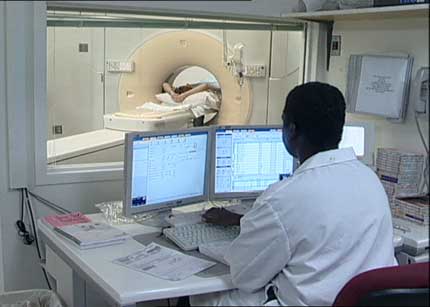
Computed tomography, more commonly known as a CT or CAT scan, is a diagnostic medical imaging test. Like traditional x-rays, it produces multiple images or pictures of the inside of the body.
A CT scan generates images that can be reformatted in multiple planes. It can even generate three-dimensional images. Your doctor can review these images on a computer monitor, print them on film or via a 3D printer, or transfer them to a CD or DVD.
CT images of internal organs, bones, soft tissue, and blood vessels provide greater detail than traditional x-rays. This is especially true for soft tissues and blood vessels.
CT colonography, also known as virtual colonoscopy, uses low dose radiation CT scanning to obtain an interior view of the colon (the large intestine). This area is otherwise only seen with a more invasive procedure where the doctor inserts an endoscope into the rectum and passes it through the entire colon.
What are some common uses of the procedure?
The major reason for performing CT colonography is to screen for polyps or cancers in the large intestine. Polyps are growths that arise from the inner lining of the intestine. A very small number of polyps may grow and turn into cancers.
The goal of screening with CT colonography is to find these growths in their early stages. This allows the doctor to remove them before cancer has a chance to develop. The American Cancer Society (ACS) recommends that women and men undergo screening for colon cancer or polyps beginning at age 45. As part of its recommendation, ACS suggests CT colonography as an option once every five years. Individuals at increased risk or with a family history of colon cancer may start screening at age 40 or younger and may be screened at shorter intervals (for example, having a colonoscopy every five years). Risk factors for the disease include a history of polyps or having a family history of colon cancer. Signs and symptoms of colon cancer include a persistent change in bowel habits, the presence of blood in the stool, abdominal discomfort or pain, bloating and unexplained weight loss.
Who interprets the results and how do I get them?
A radiologist, a doctor specially trained to supervise and interpret radiology exams, will analyze the images. The radiologist will send an official report to the doctor who ordered the exam.
In some cases, information about whether you have polyps is available immediately. Some imaging centers can perform colonoscopy and, if necessary, polyp removal the same day as the CT colonography.
You may need a follow-up exam. If so, your doctor will explain why. Sometimes a follow-up exam further evaluates a potential issue with more views or a special imaging technique. It may also see if there has been any change in an issue over time. Follow-up exams are often the best way to see if treatment is working or if a problem needs attention.
What are the benefits vs. risks?
Benefits
- This minimally invasive test provides both 2-D and 3-D images that can depict many polyps and other lesions as clearly as when they are directly seen by conventional colonoscopy.
- CT colonography has a much lower risk of perforating the colon than conventional colonoscopy. Most people who undergo CT colonography do not have polyps and can be spared having to undergo a full colonoscopy which typically requires sedation.
- CT colonography is an excellent alternative for patients who have clinical factors that increase the risk of complications from colonoscopy, such as treatment with a blood thinner or a severe breathing problem.
- Elderly patients, especially those who are frail or ill, will tolerate CT colonography better than conventional colonoscopy.
- CT colonography can be helpful when colonoscopy cannot be completed because the bowel is narrowed or obstructed for any reason, such as by a large tumor.
- If conventional colonoscopy cannot reach the full length of the colon—which occurs up to 10 percent of the time—CT colonography can be performed on the same day because the colon has already been cleansed.
- CT colonography provides clearer and more detailed images than a conventional barium enema x-ray examination.
- CT colonography can detect abnormalities outside of the colon, including early-stage malignancies in other organs and potentially dangerous conditions, such as abdominal aortic aneurysms.
- CT colonography is well tolerated. Sedation and pain relievers are not needed, so there is no recovery period and you can return to your normal daily activities immediately after the test.
- CT colonography is less costly than colonoscopy.
- No radiation remains in a patient's body after a CT exam.
- The x-rays used for CT scanning should have no immediate side effects.
Risks
- There is a very small risk that inflating the colon with air could injure or perforate the bowel. This has been estimated to happen in fewer than one in 10,000 patients.
- There is always a slight chance of cancer from excessive exposure to radiation. However, the benefit of an accurate diagnosis far outweighs the risk involved with CT scanning.
- The radiation dose for this procedure varies. See the Radiation Dose page for more information.
- Women should always tell their doctor and radiologic technologist if there is any chance they are pregnant. See the Radiation Safety page for more information about pregnancy and x-rays.
- Doctors do not generally recommend CT scanning for pregnant women unless medically necessary because of potential risk to the unborn baby.
What are the limitations of CT Colonography?
A person who is very large may not fit into the opening of a conventional CT scanner. Or, they may be over the weight limit—usually 450 pounds—for the moving table.
CT colonography is strictly a diagnostic procedure. If any clinically significant polyps are found, your doctor will have to remove them using conventional colonoscopy.
CT colonography may not differentiate stool from artifacts and smaller polyps as well as conventional colonoscopy.
CT colonography is not recommended for patients who have active Crohn's disease, ulcerative colitis, inflammatory bowel disease or diverticulitis, because of increased risk of perforating the colon. Patients with a history of bowel perforation and those experiencing severe pain or cramps on the day of the exam should not undergo CT colonography.
Some insurance companies do not cover CT colonography as a screening test for colonic polyps, but they may cover the cost if a patient has symptoms related to the colon. Recently, the United States Preventive Services Task Force (USPSTF) assigned a grade of "A" to CT colonography as a screening modality for the detection of colon cancer. This decision, according to provisions included in the Affordable Care Act, mandates coverage by private insurance companies participating in the insurance exchange program. As a result, Medicare now covers screening CT colonography as of January 2025.
Additional Information and Resources
RTAnswers.org: Radiation Therapy for Colorectal Cancer