Last reviewed on June 01, 2026
Professions in Diagnostic Radiology
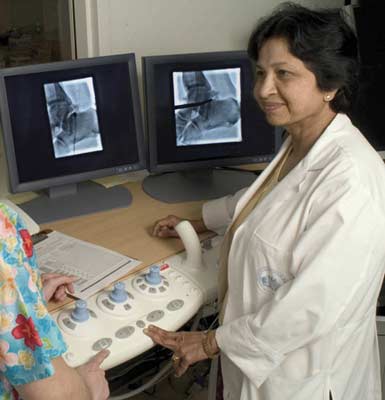
Radiologist
A radiologist is a physician who completed medical school and received specialized training in obtaining and interpreting medical images using x-rays (radiographs, CT, fluoroscopy),radioactive substances (nuclear medicine), sound waves (ultrasound) or magnets (MRI).
Almost all physicians examine patients, obtain medical histories, diagnose illnesses, and prescribe and treat injury or disease. A radiologist connects your medical image to other examinations and tests, recommends further examinations or treatments, and talks with the doctor who sent you for your exam. Radiologists also treat diseases by means of radiation (nuclear medicine) or minimally invasive, image-guided surgery (interventional radiology).
A radiologist must first graduate from an accredited medical school, earn an MD or DO degree, pass a licensing examination, perform a year of internship, and complete at least four years of graduate medical education (residency) in radiology. After residency, these doctors may choose a fellowship program and sub-specialize in one or more areas of radiology.
Radiologists who are board certified are approved to practice in the field by either the American Board of Radiology or the American Osteopathic Board of Radiology.Subspecialties for Radiologists
A radiologist may also specialize in one or more radiology subspecialties. These include:
Abdominal (Body) Radiology
The radiology subspecialty devoted to the diagnostic imaging and diagnosis of the gastrointestinal (GI) or digestive tract (the stomach and intestines) and abdomen. This includes fluoroscopy, x-rays, CT (computed tomography or CAT), Ultrasound, MRI, and GI procedures such as biopsy and fluid and abscess drainage.
Breast imaging
The radiology subspecialty devoted to the diagnostic imaging and diagnosis of breast diseases and conditions. This includes mammography, breast ultrasound, breast MRI, and breast procedures such as breast biopsy.
Cardiovascular Radiology
The radiology subspecialty devoted to the diagnostic imaging and diagnosis of diseases of the heart and vascular or circulatory system (including blood and lymphatic vessels). This includes x-rays, CT (computed tomography or CAT), ultrasound and MRI.
Chest Radiology
The radiology subspecialty devoted to diagnostic imaging and diagnosis of diseases of the chest, especially the heart and lungs. This includes x-rays, CT (computed tomography or CAT), Ultrasound, MRI and chest procedures, such as lung biopsy and thoracentesis or drainage of fluid from the chest.
Emergency Radiology
The radiology subspecialty devoted to the diagnostic imaging and diagnosis of trauma and non-traumatic emergency conditions. This includes x-rays, CT (computed tomography or CAT), Ultrasound and MRI.
Genitourinary Radiology
The radiology subspecialty devoted to the diagnosis and treatment of the organs of the reproductive and urinary systems. This includes x-rays, CT (computed tomography or CAT), MRI and procedures such as biopsy, kidney stone removal, and uterine fibroid removal.
Musculoskeletal Radiology
The radiology subspecialty devoted to the diagnostic imaging and diagnosis of the muscles and the skeleton. This includes x-rays, CT (computed tomography or CAT), Ultrasound and MRI.
Neuroradiology
The radiology subspecialty devoted to the diagnostic imaging and diagnosis of the brain and nervous system, head, neck and spine. This includes x-rays, CT (computed tomography or CAT), Ultrasound and MRI.
Pediatric Radiology
The radiology subspecialty devoted to the diagnostic imaging and diagnosis of diseases of children. This includes x-rays, CT (computed tomography or CAT), Ultrasound, MRI and procedures such as fluoroscopy, biopsy and drainage of fluid or abscess collections.
Interventional Radiology
The radiology subspecialty devoted to the imaging, diagnosis and treatment of patients utilizing minimally invasive interventional techniques. This includes imaging and treatment of the blood vessels (such as angiography, angioplasty and stent placement), biopsy procedures, line and tube placement, uterine fibroid removal, fluid and abscess drainage. These may be performed with imaging guidance using x-rays, fluoroscopy, CT (computed tomography or CAT), Ultrasound or MRI.
Nuclear Radiology
The radiology subspecialty devoted to the imaging, diagnosis and treatment of patients using trace doses of radioactive material. This includes imaging of the heart, the skeletal system, and most organs in the body (for example the thyroid and parathyroid glands, liver, spleen, kidneys, lungs, etc.). It also includes the treatment of various conditions in the body such as a hyperactive thyroid gland and thyroid cancer. The imaging modalities include gamma imaging, PET, and PET/CT.
Diagnostic Medical Physicists
A diagnostic medical physicist is a qualified medical physicist who works with radiologists and other physicians on image modalities such as CT (computed tomography), x-rays (radiography), fluoroscopy, mammography, ultrasound and MRI (magnetic resonance imaging).
As an integral part of the imaging team, the diagnostic medical physicist develops and directs quality control programs that ensure imaging equipment and procedures are safe, comply with various regulatory and accrediting agency requirements, and provide images of the highest quality. Diagnostic medical physicists perform radiation dose calculations and often consult on patient or personnel radiation dose and associated risks. They also act as a resource for physicians and radiologic technologists, helping them better understand the technical aspects of imaging methods so that they can use them most effectively.
Diagnostic medical physicists have doctorates or master's degrees. They have completed four years of college, two to four years of graduate school and typically one to two years of clinical physics training. They are certified by the American Board of Radiology or the American Board of Medical Physics.
Radiologist Assistants
Radiologist assistants are experienced, registered radiographers who have obtained additional education and certification that qualifies them to serve as radiology extenders. They work under the supervision of a radiologist to provide patient care in the diagnostic imaging environment. Specifically, an RA takes a leading role in patient management and assessment. In addition, an RA performs selected radiology examinations and procedures under the supervision of a radiologist. The RA also may be responsible for evaluating image quality, making initial image observations and forwarding those observations to the supervising radiologist.
Although RAs can perform functions beyond those of a radiologic technologist, the position holds certain limitations. An RA may make initial observations of images, but may not draft an official written interpretation.
Radiologist assistants complete an academic program and a radiologist-supervised clinical internship. An RA must be certified by the American Registry of Radiologic Technologists. Currently, there are nine Registered Radiologist Assistant programs in the country recognized by ARRT and seven of the programs offer master's degrees.
Further information about a career as a radiologist assistant can be found on the American Society of Radiologic Technologists (ASRT) website.
Radiologic Technologists
Radiologic technologists perform diagnostic imaging examinations and perform radiation therapy treatments. Radiologic technologists who perform medical imaging examinations work closely with radiologists and are responsible for accurately positioning patients and ensuring that a quality diagnostic image is produced. Radiologic technologists work directly with patients and are responsible for explaining procedures, positioning patients on the examining table and adjusting immobilization devices to obtain optimum views of specific body areas. The radiologic technologist moves the imaging equipment into position and adjusts equipment controls based on his or her knowledge of the procedure.
The radiologic technologist also is responsible for using radiation safety techniques to ensure exposures for team members and patients meet ALARA (As Low As Reasonably Achievable) standards. To prevent unnecessary radiation exposure, a radiologic technologist uses radiation protective devices like lead aprons and shields. In addition, the radiologic technologist sets the appropriate collimation to minimize scatter radiation. Collimation is the process of adjusting the x-ray beam to the anatomic area appropriate for the procedure.
The radiologic technologist also may operate mobile x-ray or ultrasound equipment to obtain images in the emergency room, operating room or at the patient's bedside. Technologists also assist radiologists with general radiology, computed tomography, magnetic resonance imaging and ultrasound procedures.
Radiologic technologists also work on the radiation oncology team. Radiation therapists administer targeted doses of radiation to the patient's body to treat cancer or other diseases. Radiation therapists are highly skilled medical specialists educated in physics, radiation safety, patient anatomy and patient care.
Registered radiologic technologists must complete at least two years of formal education in an accredited hospital-based program or a two- or four-year educational program at an academic institution and must pass a national certification examination. With additional education and training, a radiologic technologist can specialize in a particular diagnostic imaging area. Radiologic technologists are certified by the American Registry of Radiologic Technologists. To remain registered, technologists must complete continuing education credits.
More information about a career as a radiologic technologist can be found on the (American Society of Radiologic Technologists (ASRT) website.
Sonographers
Sonographers—also known as ultrasound technologists—operate equipment that uses sound waves to capture images of a patient’s tissues and internal organs. They work directly with patients in a variety of settings such as hospitals, outpatient clinics, physician offices and imaging centers.
Sonographers have several responsibilities, including:
- preparing the ultrasound equipment for each scan
- explaining procedures to patients
- positioning patients on the exam table
- acquiring all the necessary images for your study
Sonographers must complete at least two years of formal education in an accredited hospital-based program. A two- or four-year educational program at an academic institution is another option. Candidates also must pass a national certification exam. One-year certificate programs are available for those with training and experience in another healthcare field.
Diagnostic medical sonographers can apply for certification through the American Registry for Diagnostic Medical Sonography (ARDMS). They also may apply through the American Registry for Radiologic Technologists (ARRT).
With additional education and training, a Registered Diagnostic Ultrasound Sonographer (RDUS) can specialize in specific diagnostic imaging areas. Specialties include abdominal, echocardiography, breast, obstetrics and gynecology, vascular, pediatric, musculoskeletal and neurosonography.
More information about a career as a sonographer can be found on the Society of Diagnostic Medical Sonography (SDMS) website.
Radiologic Nurse
The larger medical centers may employ a radiologic nurse who provides for the physical, mental, and emotional needs of the radiology department patient undergoing tests or treatment. The radiologic nurse usually develops and manages a care plan to help patients understand and, later, recuperate from the procedures. This may also include working with a patient's family.
The nurse can perform examinations or carry out preventive health measures within the prescribed guidelines and instructions of the radiologist. In addition, the nurse can record physician findings and discuss cases with either the radiologist or other health care professionals. Often, a radiologic nurse will assist during examinations or therapy. Radiologic nurses must have graduated from an accredited nursing school. Each nurse must also pass a national licensing examination.