Last reviewed on December 22, 2025
MRI Safety
What is MRI and how does it work?
Magnetic resonance imaging, or MRI, is a diagnostic procedure that obtains detailed images of organs and tissues throughout the body, without the need for x-rays or "ionizing" radiation. Instead, MRI uses a powerful magnetic field, radio energy, rapidly changing magnetic fields, and a computer to create images that show whether an injury, disease process, or abnormal condition is present.
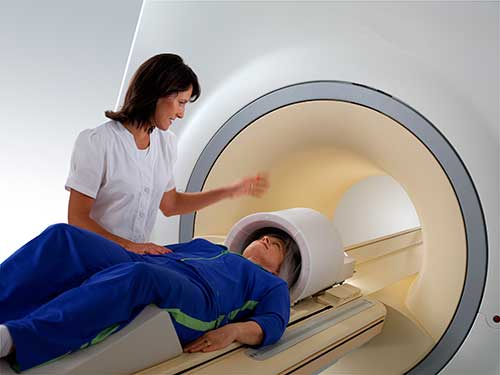
For the MRI exam, the technologist will place the patient inside the MRI scanner, typically a large donut-shaped machine that is open on both ends. The powerful magnetic field aligns atomic particles called protons that exist in body tissues. The applied radio energy then interacts with these protons to produce signals that a receiver within the MRI scanner will pick up. The signals are specially changed using the rapidly changing magnetic fields. Computer processing creates cross-sectional images of tissues "slices" that the radiologist can view in any orientation.
An MRI exam usually causes no physical pain and, importantly, the electromagnetic fields produce no known tissue damage when applied correctly. The MRI system may make loud tapping, knocking, or other noises at times during the procedure. The technologist will provide you with earplugs to prevent hearing loss and other problems associated with the noise generated by the scanner. The technologist will always monitor you, and you will be able to communicate with the MRI technologist using an intercom system or by other means.
What is MRI used for?
MRI is the preferred procedure for diagnosing a wide range of potential problems or abnormal conditions that may affect different parts of the body. In general, MRI creates pictures that can show differences between healthy and unhealthy, or abnormal, tissues. Physicians use MRI to examine the brain, spine, joints (e.g., knees, shoulders, hips, wrists, and ankles), abdomen, pelvic region, breasts, blood vessels, heart, and other body parts.
How safe is MRI?
Usually, the benefits of an MRI exam far outweigh the risks. The powerful magnetic field of the MRI system can attract objects made from certain metals (i.e., metals known to be ferromagnetic, such as iron) and cause them to move suddenly and with great force. This effect can pose a risk to the patient or anyone in the object's "flight path." Therefore, facility staff take great care to ensure that no one brings external objects such as screwdrivers and oxygen tanks into the MRI system room.
As a patient, it is vital that you remove all metallic belongings in advance of an MRI examination, including external hearing aids, watches, jewelry, cell phones, and items of clothing with metallic threads or fasteners. Additionally, you should remove makeup, nail polish, or other cosmetics that may contain metallic particles if applied to the area of the body undergoing the MRI examination.
Various clothing items, such as athletic wear (e.g., yoga pants, shirts, etc.), socks, braces, and others, may contain metallic threads or metal-based antibacterial compounds that pose a hazard. These items can heat up and burn the patient during an MRI. Therefore, MRI facilities typically require patients to remove all potentially problematic clothing items before undergoing an MRI examination.
The powerful magnetic field of the MRI system will pull on any ferromagnetic object in or on the patient’s body, such as a medical implant (e.g., certain aneurysm clips, medication pumps, etc.). Therefore, all MRI facilities have comprehensive screening procedures and protocols they use to identify any potential hazards. When carefully followed, these steps ensure that the MRI technologist and radiologist know about the presence of any metallic objects, so they can take necessary precautions to keep the patient safe.
In some unusual cases, the technologist or radiologist may have to cancel the exam due to the presence of an unacceptable implant or device. For example, they will not perform the MRI exam if a ferromagnetic aneurysm clip is present because the clip may move and cause serious harm to the patient. Besides possibly moving or dislodging, certain medical implants can heat substantially during the MRI exam due to the radio energy used for the procedure. MRI-related heating may result in an injury to the patient. Therefore, as a patient, it is very important for you to inform the MRI technologist about any implant or other internal or external object that you may have before entering the MRI scanner room.
The powerful magnetic field of the MRI system may damage an external hearing aid or cause a heart pacemaker, electrical stimulator, or neurostimulator to malfunction, potentially resulting in injury. If you have a bullet or any other metallic fragment in your body, there is a potential risk that it could move within your body and possibly cause an injury.
In addition, a metallic implant or other object may cause signal loss or alter the MRI pictures, making it difficult for the radiologist to see the images correctly. These “artifacts” may be unavoidable, but if the radiologist knows about them, they can make adjustments when obtaining and interpreting the MRI pictures.
For some MRI exams, the technologist may inject a gadolinium contrast agent into a vein to help improve the information seen on the MRI pictures. Unlike the contrast materials used in x-ray exams or computed tomography (CT) scans, a gadolinium contrast agent does not contain iodine and, therefore, rarely causes an allergic reaction or other problem. However, if you have a history of allergic reaction to gadolinium contrast agent, kidney disease, kidney failure, kidney transplant, liver disease, or other conditions, you should inform the MRI technologist and/or radiologist before receiving a gadolinium contrast agent. If you are unsure about the presence of these conditions, please discuss these matters with the MRI technologist or radiologist before the MRI examination.
How should I prepare for my MRI exam?
You will typically receive a special gown to wear during your MRI examination. Before entering the MRI system room, the technologist will ask you a variety of questions using a screening form, including whether you have implants or devices. Next, the technologist will instruct you to remove all metallic objects from your pockets and hair, as well as metallic jewelry. Additionally, any individual who may be present during your MRI will need to remove all metallic objects and fill out a screening form. If you have any questions or concerns, please discuss them with the MRI technologist or radiologist before the MRI exam.
As previously indicated, the technologist will ask you to fill out a screening form asking about anything that might create a health risk or interfere with the MRI exam. Items that may create a health hazard or other problems during an MRI exam include:
- Cardiac pacemakers or implantable cardioverter defibrillators (ICDs)
- Vascular clips, placed to prevent bleeding from blood vessels
- External or implanted medication pumps (such as those used to deliver insulin, pain-relieving drugs, or chemotherapy)
- Certain cochlear (i.e., for hearing) implants
- Neurostimulation systems
- Catheters that have metallic components
- Bullets, shrapnel, or other types of metallic fragments
- Metallic objects located within or near the eye (the radiologist can generally see such an object on an x-ray; metal workers are most likely to have this problem)
Important note: Some items, including newer cardiac pacemakers, ICDs, neurostimulation systems, cochlear implants, and medication pumps, are acceptable for MRI. However, the MRI technologist and radiologist must know the exact type that you have to follow special procedures to ensure your safety. Therefore, please provide the name of the device and manufacturer to the MRI technologist before the MRI exam.
Items that patients and individuals need to remove before entering the MRI system room include:
- Purse, wallet, money clip, credit cards, and other cards with magnetic strips
- Electronic devices such as beepers, cell phones, smartphones, and tablets
- External hearing aids
- Metallic jewelry and watches
- Pens, keys, and coins
- Hair barrettes, hairpins, hair clips, and some hair ointments
- Shoes, belt buckles, and safety pins
- Any article of clothing that has metallic fibers or threads, metal-based antibacterial compounds, metallic zippers, buttons, snaps, hooks, or underwire
Objects that may interfere with image quality if close to the area under examination include:
- Metallic spinal rod
- Plates, pins, screws, or metal mesh used to repair a bone or joint
- Joint replacement or prosthesis
- Metallic jewelry, including those used for body piercing or body modification
- Some tattoos or tattooed eyeliner (there is also a chance of skin irritation or burning; additionally, the MRI system may smear new tattoos)
- Makeup (such as eye shadow and eyeliner), nail polish, or other cosmetics that may contain metal
- Dental fillings or braces (while usually unaffected by the magnetic field, these may distort images of the facial area or brain; the same is true for orthodontic braces and retainers)
An example of the MRI examination
MRI exams take place in a special room that houses the MRI scanner. A staff member of the MRI facility will escort you into the room and ask you to lie down on a comfortably padded table that gently glides you into and out of the scanner. The typical scanner is open on each end, or at least two sides.
In general, in preparation for the MRI exam, you will need to wear earplugs and headphones to protect your hearing because the MRI scanner can produce loud noises. These loud noises are normal and should not worry you.
For some MRI exams, the technologist may inject a contrast agent called gadolinium into a vein to help obtain a clearer picture of the area under examination. Typically, at the beginning of the imaging procedure, a nurse or MRI technologist will place an intravenous line in your arm or hand vein using a small needle. This line will allow injection of the gadolinium contrast agent during the MRI exam. The technologist or nurse will connect the line to a saline solution that will drip through the intravenous line to prevent clotting until the technologist injects the actual contrast agent at some point during the exam. Sometimes, the technologist will inject the contrast agent using an automatic device. At other times, the technologist or nurse must come into the room to inject the contrast agent. They may have to slide the table out of the scanner to do this.
The most important thing for the patient to do is to lie still and relax. Most MRI exams take between 15 and 45 minutes to complete, depending on the body part under examination and the number of pictures needed. However, some exams may take up to 60 minutes or longer. The technologist or nurse will tell you ahead of time how long they expect your scan to take.
The technologist will ask you to remain perfectly still during the time the imaging takes place, but between sequences, some minor movement may be allowed. The MRI technologist will advise you accordingly.
When the MRI exam begins, you may breathe normally. However, for certain exams, it may be necessary for you to hold your breath for a short period. Again, the MRI technologist will advise you accordingly.
During your MRI examination, the MRI technologist will be able to speak to you, hear you, and always observe you. You will also be handed a call button, which you can use if you have questions or feel anything unusual during the MRI exam.
When the MRI exam is over, the technologist may ask you to wait until they check the images to determine if more images are necessary. After the exam, you are free to resume your normal activities.
Once the entire MRI exam is complete, the radiologist will review the images. The radiologist is a physician who has been specially trained to interpret images used for diagnostic purposes. The radiologist will communicate the findings of the MRI exam to your physician.
The question of anxiety or claustrophobia
Some patients who undergo MRI examinations may feel confined, closed-in, or frightened. One out of every twenty people may require a mild sedative to remain calm. Some MRI centers permit a relative, friend, or personal item to accompany the patient into the MRI system room, which also has a calming effect on the patient. Some MRI centers may have different MRI systems, so patients with anxiety can move to a scanner that is less confining or more open than the others. If patients are properly prepared and know what to expect, it is almost always possible to complete the examination.
Pregnancy and MRI
If you are pregnant or suspect you are pregnant, you should inform the MRI technologist and/or radiologist during the screening procedure that occurs before the MRI examination. In general, there is no known risk of getting an MRI if you are pregnant. However, the facility may reschedule the MRI exam for after pregnancy if the exam is not urgent. Additionally, most MRI centers avoid the use of contrast agents in pregnant patients out of an abundance of caution. In any case, MRI is usually safer for the fetus than imaging with x-rays or computed tomography (CT). For additional information see MRI During Pregnancy.
Breast-feeding and MRI
You should inform the MRI clinic that you are breastfeeding when scheduling your MRI exam. This is particularly important if you receive an MRI contrast agent. While radiologists consider it safe to continue breastfeeding after receiving the contrast agent, some parents choose to temporarily stop breastfeeding out of an abundance of caution. One option in this situation is to pump breast milk before the MRI exam, which you can use to feed the infant until the contrast agent clears from the body (in about 12-24 hours). The clinic or radiologist can provide you with additional information regarding this matter.
Are there risks of not getting an MRI?
As discussed above, there are risks associated with getting an MRI scan, especially for people with certain implants or medical conditions. The MRI clinic will ensure that the benefits of your scan outweigh the risks before your scan begins. If you have concerns about your MRI scan, ask your doctor, such as whether another technique would work (e.g., computed tomography [CT] or ultrasound) or how the MRI scan will help manage your care. You may decide that you do not want to get an MRI exam. This is your choice, but it is important to know that there are also risks resulting from not getting an MRI scan. These risks include the possibility of delayed diagnosis (not learning you have a disease until it gets worse or spreads) and misdiagnosis (being told you have the incorrect disease or are healthy when you are not).
Sometimes, an MRI clinic may decide that you cannot get an MRI because of your implants or medical conditions. You should ask the clinic why you cannot get the scan and if there are any good alternative exams for you (e.g., CT or ultrasound). If you still think you should be able to get an MRI exam, you may contact other MRI clinics to see if they have the resources or expertise to scan you. To locate a medical imaging or radiation oncology provider in your community, you can search the ACR Accredited Facilities Database.
Additional Information and Resources
The MRI safety information on this page was developed in cooperation with the Institute for Magnetic Resonance Safety, Education, and Research and from relevant content obtained from www.MRIsafety.com where you can find more detailed MRI safety information.