Last reviewed on June 15, 2026
Esophageal Cancer Treatment
What is Esophageal Cancer?
Esophageal cancer develops in the lining of the esophagus. This long, tube-like structure connects the throat and the stomach. As a part of the upper digestive system, it carries swallowed food to the stomach. The wall of the esophagus consists of several layers of tissue.
There are two main types of esophageal cancer:
- squamous cell carcinoma – cancer that develops in the thin, flat squamous cells.
- adenocarcinoma – cancer that develops in glandular cells.
Early-stage esophageal cancer may have no symptoms. Advanced cancer symptoms may include:
- difficulty or pain when swallowing
- weight loss
- pain with swallowing or in the chest
- coughing and regurgitation
- hoarseness
- vomiting blood
- tarry, black stool or blood in stool
- indigestion and heartburn
What are my treatment options?
Treatment options include:
Surgery
For early-stage disease it may be used on its own, while for more advanced tumors it is usually combined with other therapies, often after chemotherapy and radiation given to shrink the tumor first. For a very small tumor confined to the innermost lining of the esophagus, the abnormal tissue can often be removed through an endoscope (a procedure called endoscopic resection) rather than with open surgery. In more advanced cancers, a surgeon may remove part of the esophagus in an operation called an esophagectomy. Surgeons frequently use a minimally invasive approach. Working through small incisions between the ribs and in the abdomen, the surgeon uses a thoracoscope, a thin, tube-like instrument with a light and a camera, and in some centers a surgical robot, to remove the affected part of the esophagus. The surgeon removes the cancerous portion of the esophagus along with nearby lymph nodes. They re-connect the remaining esophagus to the stomach or part of the patient's gastrointestinal (GI) tract. In an esophagogastrectomy, the surgeon removes the diseased part of the esophagus, nearby lymph nodes, and part of the stomach if the cancer has spread near or into the stomach.
Endoscopic treatments treat early cancers and pre-cancerous tissue. These include:
- Endoscopic mucosal resection (EMR): This procedure inserts a thin flexible tube called an endoscope through the throat and down to the esophagus. The device has a light, video camera, and surgical tools to remove cancerous tissue. The doctor uses it to lift and remove abnormal or early cancerous tissue from the lining of the esophagus. It is used for precancerous changes and for very early tumors confined to the innermost layer.
- Endoscopic submucosal dissection (ESD): A similar but more extensive technique that allows the doctor to remove larger or slightly deeper areas of abnormal tissue in one piece, using specialized cutting tools passed through the endoscope.
This treatment stops cancer cells from dividing and kills them. Your doctor may use it before or after surgery or in combination with radiation therapy. Chemotherapy also helps relieve symptoms when cancer has spread (metastasized).
Targeted therapy (including Monoclonal Antibody Therapy)
A small number of esophageal cancers have too much of a protein called HER2 on the surface of their cells. A drug known as trastuzumab (Herceptin) is a monoclonal antibody that attaches to the HER2 protein on cancer cells and interferes with their ability to grow. Another target is a protein called Claudin 18.2, found on the surface of some esophageal and stomach cancer cells, which can be treated with a newer antibody called zolbetuximab. Doctors test the tumor tissue to determine which of these targets, if any, are present. The doctor may combine targeted therapy with chemotherapy.
This approach uses drugs that help the patient's own immune system recognize and attack cancer cells. Several immunotherapy drugs are now an established part of treatment. It can be combined with chemotherapy for advanced or metastatic esophageal cancer. May be given after chemoradiation and surgery when residual cancer is found in the removed tissue, which can lengthen the time before the cancer returns. For tumors lower in the esophagus, near the stomach, immunotherapy can be given together with chemotherapy before surgery and continued afterward, an approach shown to improve survival.
This treatment uses radiation to kill cancer cells.
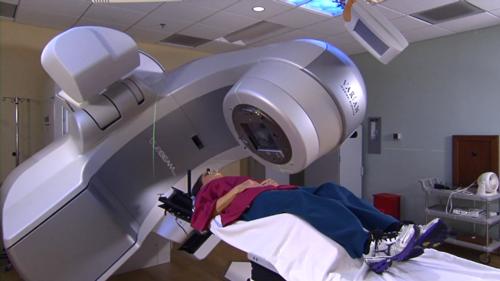
Esophageal cancer patients may receive external beam radiation therapy (EBRT). EBRT uses a machine to generate beams of high-energy radiation and direct them at the tumor. Doctors use photons (x-rays) or protons (proton therapy) to treat esophageal cancer.
Your treatment plan may combine therapies. Patients who are not candidates for surgery typically receive radiation together with chemotherapy, a combination called chemoradiation. Surgical patients may receive chemoradiation before surgery to help shrink the tumor (neoadjuvant treatment). In selected cases, radiation may be given after surgery (adjuvant therapy), for example when a patient did not receive radiation beforehand and cancer cells were found at the edge of the removed tissue. Radiation may also help manage symptoms and complications of advanced disease. These may include tumor growth that prevents food reaching the stomach, tumor bleeding, and pain.
What happens during radiation therapy?
EBRT begins with simulation and treatment planning. Simulation will determine your position on the treatment table. The treatment team will make devices to help you maintain that position. They may make body molds, head masks, or other devices to help you stay still during treatment. The team may also apply temporary skin marks or tattoos to help precisely position you for each treatment session.
Your doctor will use computed tomography (CT), position emission tomography (PET), or magnetic resonance imaging (MRI) to map the location of the cancer and healthy tissues nearby. Using these images and treatment planning tools, the team – dosimetrist, radiation physicist and radiation oncologist – will create a treatment plan. The plan guides delivery of the right amount of radiation to the tumor while minimizing exposure to surrounding normal tissues.
After simulation and planning, treatment can begin.
EBRT often uses high energy x-rays from a machine called a linear accelerator. Different EBRT techniques include three-dimensional conformal radiation therapy (3D-CRT), intensity modulated radiation therapy (IMRT), in combination with image-guided radiation therapy (IGRT).
- 3D-CRT aims several beams at the tumor from different angles. Each beam is shaped to match the tumor's outline, but the radiation is delivered at a single, uniform strength across that beam.
- IMRT also aims shaped beams from multiple angles, but it can change the strength of the radiation within each beam, increasing the dose over the tumor and decreasing it where a sensitive organ lies in the path. This finer control helps protect nearby structures like the heart and lungs.
- IGRT uses imaging at the treatment machine before (and sometimes during) each session to ensure precise delivery of radiation to the same location with each dose.
Proton therapy is another form of EBRT offered at some centers. It uses protons instead of x-rays to treat the cancer. The key difference is how the radiation behaves inside the body: x-ray beams pass all the way through, depositing some dose in healthy tissue both in front of and behind the tumor, while proton beams release most of their energy right at the tumor and then stop. Because they don't continue past the target, protons can lower the radiation dose to nearby organs such as the heart and lungs. For esophageal cancer, this may be helpful for certain patients, although it is not needed for everyone, and your radiation oncologist can advise whether it is a good option for you.
You may need to change into a gown before each treatment. You will lie on the treatment couch in the same position as the simulation using the immobilization devices. The therapist leaves the room and turns on the linear accelerator from outside.
You will have a series of outpatient treatment sessions over several weeks, typically delivered daily, Monday through Friday, except weekends. Your diagnosis will determine how long treatment will take. Each session lasts less than an hour. Getting into the correct position on the treatment table occupies most of this time.
What are possible side effects of radiation therapy?
Radiation treatment can cause side effects. These problems may result from the treatment itself or from radiation damage to healthy cells in the treatment area.
The type of radiation, dose, and body part under treatment will all affect the number and severity of side effects. Talk to your doctor and/or nurse so they can help manage them.
Radiation may cause early or acute side effects during treatment. You may also have chronic or late side effects months or years after treatment. These side effects vary and may depend on your general health and the body area under treatment. They may also depend on daily radiation dose, total treatment dose, and other treatments (such as chemotherapy) you may have at the same time.
Many patients begin to notice symptoms such as pain or difficulty swallowing around the second week of treatment. These symptoms may become more noticeable toward the end of treatment. This happens because radiation can irritate the lining of the esophagus, similar to a sunburn. Make sure you drink plenty of water and maintain good nutrition during this time. If swallowing becomes too difficult, a temporary feeding tube may be needed to support nutrition. After treatment is complete, the symptoms usually subside within a few weeks.
Other common side effects include:
- fatigue
- skin changes in the treated area, including dryness, itching, peeling, or blistering
- diarrhea
- fatigue
- nausea (especially if the abdomen is treated)
- inflammation from radiation to the chest, which may lead to difficulty swallowing, coughing, or feeling short of breath
- pain with or difficulty swallowing
- lower blood counts (especially when combined with chemotherapy), which can lead to increased fatigue and risk of infection and bruising
- loss of hair in the treatment area
Most of these side effects improve within one to two months after treatment.
You may have late or long-term side effects months or years after treatment. This depends on the body area under treatment, the treatment itself, and individual risk factors. Possible long-term effects include:
- stricture (narrowing) in the esophagus, which may require treatments to reopen the passage, often with an endoscopy. This may not be an issue if the patient undergoes surgery to have the radiated portion of the esophagus removed.
- fibrosis (scar tissue replaces normal tissue) which makes tissues less flexible)
- lung inflammation (pneumonitis) which can cause cough, fever, or shortness of breath, and in some cases lead to long-term scarring of the lungs
- heart effects, such as changes in heart function over time
- thyroid problems (if the neck area is treated with radiation)
- rarely, ulcers, bleeding or abnormal connections between organs (fistulas) can occur in the esophagus, or in the stomach or small bowel if these organs were in the radiation field
- a very small risk of developing another (secondary) cancer later in life due to radiation
After treatment, your radiation oncologist will see you regularly to check for late side effects, as well as to check for any signs of cancer returning.
Talk to your doctor before and during treatment about what side effects to expect and ways you can minimize them.
Are there any new developments in treating my disease?
- Immunotherapy has become an established part of treatment. Drugs that help the immune system fight cancer are now used for advanced disease and, in certain situations, before or after surgery to lower the chance the cancer returns.
- Targeted therapy is expanding as researchers identify more markers on tumor cells, that specific drugs can act on. Testing the tumor for these markers helps match patients to treatments most likely to help them.
- Organ-preserving approaches are being studied. For some early cancers, or for patients who respond very well to chemotherapy and radiation, doctors may be able to avoid surgery and keep the esophagus intact.
- Blood-based monitoring (circulating tumor DNA) is an emerging test. It looks for tiny amounts of cancer DNA in the blood. In the future this may help detect remaining cancer after treatment or find recurrence of cancer earlier than imaging can.
- Radiation and surgical techniques continue to improve. Newer radiation techniques can now better target the tumor while protecting nearby organs and thus minimize side effects. Minimally invasive and robotic surgeries may help reduce side effects and shorten recovery time.