Last reviewed on September 27, 2024
Chest X-ray
Chest x-ray uses a very small dose of ionizing radiation to produce pictures of the inside of the chest. It is used to evaluate the lungs, heart and chest wall and may be used to help diagnose shortness of breath, persistent cough, fever, chest pain or injury. It also may be used to help diagnose and monitor treatment for a variety of lung conditions such as pneumonia, emphysema and cancer. Because chest x-ray is fast and easy, it is particularly useful in emergency diagnosis and treatment.
This exam requires little to no special preparation. Tell your doctor and the technologist if there is a possibility you are pregnant. Leave jewelry at home and wear loose, comfortable clothing. You may be asked to wear a gown.
- What is a chest X-ray?
- What are some common uses of the procedure?
- How should I prepare?
- What does the equipment look like?
- How does the procedure work?
- How is the procedure performed?
- What will I experience during and after the procedure?
- Who interprets the results and how do I get them?
- What are the benefits vs. risks?
- What are the limitations of chest x-ray?
What is a chest X-ray?
The chest x-ray is the most commonly performed diagnostic x-ray examination. A chest x-ray produces images of the heart, lungs, airways, blood vessels and the bones of the spine and chest.
An x-ray exam helps doctors diagnose and treat medical conditions. It exposes you to a small dose of ionizing radiation to produce pictures of the inside of the body. X-rays are the oldest and most often used form of medical imaging.
What are some common uses of the procedure?
The chest x-ray is performed to evaluate the lungs, heart and chest wall.
A chest x-ray is typically the first imaging test used to help diagnose symptoms such as:
- breathing difficulties
- a bad or persistent cough
- chest pain or injury
- fever
Physicians use the examination to help diagnose or monitor treatment for conditions such as:
How should I prepare?
A chest x-ray requires no special preparation.
You may need to remove some clothing and/or change into a gown for the exam. Remove jewelry, removable dental appliances, eyeglasses, and any metal objects or clothing that might interfere with the x-ray images.
Women should always tell their doctor and technologist if they are pregnant. Doctors will not perform many tests during pregnancy to avoid exposing the fetus to radiation. If an x-ray is necessary, the doctor will take precautions to minimize radiation exposure to the baby. See the Radiation Safety page for more information about pregnancy and x-rays.
What does the equipment look like?
The equipment typically used for chest x-rays consists of a wall-mounted, box-like apparatus containing the x-ray film, or a special plate that records the image digitally. An x-ray producing tube is positioned about six feet away.
The equipment may also be arranged with the x-ray tube suspended over a table on which the patient lies. A drawer under the table holds the x-ray film or digital recording plate.
Compact, portable x-ray machines can be taken to the patient in a hospital bed or the emergency room. The x-ray tube is connected to a flexible arm. The technologist extends the arm over the patient and places an x-ray film holder or image recording plate under the patient.
How does the procedure work?
X-rays are a form of radiation like light or radio waves. X-rays pass through most objects, including the body. The technologist carefully aims the x-ray beam at the area of interest. The machine produces a small burst of radiation that passes through your body. The radiation records an image on photographic film or a special detector.
Different parts of the body absorb the x-rays in varying degrees. Dense bone absorbs much of the radiation while soft tissue (muscle, fat, and organs) allow more of the x-rays to pass through them. As a result, bones appear white on the x-ray, soft tissue shows up in shades of gray, and air appears black.
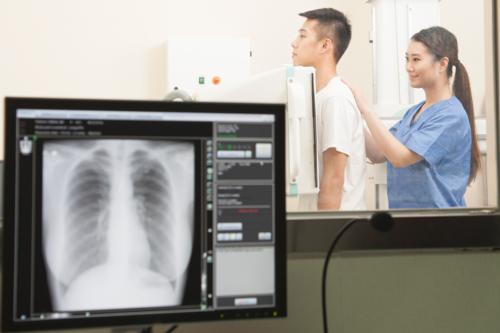
On a chest x-ray, the ribs and spine will absorb much of the radiation and appear white or light gray on the image. Lung tissue absorbs little radiation and will appear dark on the image.
Most x-ray images are electronically stored digital files. Your doctor can easily access these stored images to diagnose and manage your condition.
How is the procedure performed?
Typically, two views of the chest are taken, one from the back and the other from the side of the body as the patient stands against the image recording plate. The technologist, an individual specially trained to perform radiology examinations, will position the patient with hands on hips and chest pressed against the image plate. For the second view, the patient's side is against the image plate with arms elevated.
Patients who cannot stand may be positioned lying down on a table for chest x-rays.
You must hold very still and may need to hold your breath for a few seconds while the technologist takes the x-ray. This helps reduce the possibility of a blurred image. The technologist will walk behind a wall or into the next room to activate the x-ray machine.
When the examination is complete, the technologist may ask you to wait until the radiologist confirms they have all the necessary images.
The entire chest x-ray examination, from positioning to obtaining and verifying the images, is usually completed within 15 minutes.
Additional views may be required within hours, days or months to evaluate any changes in the chest.
What will I experience during and after the procedure?
A chest x-ray examination itself is a painless procedure.
You may experience discomfort from the cool temperature in the examination room and the coldness of the recording plate. Individuals with arthritis or injuries to the chest wall, shoulders or arms may have discomfort trying to stay still during the examination. The technologist will assist you in finding the most comfortable position possible that still ensures diagnostic image quality.
Who interprets the results and how do I get them?
A radiologist, a doctor trained to supervise and interpret radiology examinations, will analyze the images. The radiologist will send a signed report to your primary care or referring physician who will discuss the results with you.
The results of a chest x-ray can be available almost immediately for review by your physician.
You may need a follow-up exam. If so, your doctor will explain why. Sometimes a follow-up exam further evaluates a potential issue with more views or a special imaging technique. It may also see if there has been any change in an issue over time. Follow-up exams are often the best way to see if treatment is working or if a problem needs attention.
What are the benefits vs. risks?
Benefits
- No radiation stays in your body after an x-ray exam.
- X-rays usually have no side effects in the typical diagnostic range for this exam.
- X-ray equipment is relatively inexpensive and widely available in emergency rooms, doctors’ offices, ambulatory care centers, nursing homes, and other locations. This makes it convenient for both patients and doctors.
- Because x-ray imaging is fast and easy, it is particularly useful in emergency diagnosis and treatment.
Risks
- There is always a slight chance of cancer from excessive exposure to radiation. However, given the small amount of radiation used in medical imaging, the benefit of an accurate diagnosis far outweighs the associated risk.
- The radiation dose for this procedure varies. See the Radiation Dose page for more information.
- Women should always tell their doctor and x-ray technologist if they are pregnant. See the Radiation Safety page for more information about pregnancy and x-rays.
A Word About Minimizing Radiation Exposure
Doctors take special care during x-ray exams to use the lowest radiation dose possible while producing the best images for evaluation. National and international radiology protection organizations continually review and update the technique standards radiology professionals use.
Modern x-ray systems minimize stray (scatter) radiation by using controlled x-ray beams and dose control methods. This ensures that the areas of your body not being imaged receive minimal radiation exposure.
What are the limitations of chest x-ray?
The chest x-ray is a very useful examination, but it has limitations. Because some conditions of the chest cannot be detected on a conventional chest x-ray image, this examination cannot necessarily rule out all problems in the chest. For example, small cancers may not show up on a chest x-ray. A blood clot in the lungs, a condition called a pulmonary embolism, cannot be seen on chest x-rays.
Further imaging studies may be necessary to clarify the results of a chest x-ray or to look for abnormalities not visible on the chest x-ray.
Additional Information and Resources
RTAnswers.org: Radiation Therapy for Lung Cancer