Last reviewed on September 30, 2024
Brain Tumor Treatment
- Brain Tumors Overview
- What are my treatment options?
- What happens during radiation therapy?
- What are possible side effects of radiation therapy?
- What are some of the possible risks or complications?
- What kind of treatment follow-up should I expect?
- Are there any new developments in treating my disease?
Brain Tumors Overview
A brain tumor is a group of abnormal cells that grows in or around the brain. Tumors can directly destroy healthy brain cells. They can also indirectly damage healthy cells by crowding other parts of the brain and causing inflammation, brain swelling, and pressure within the skull.
Brain tumors are malignant or benign. A malignant tumor is also called brain cancer. It grows rapidly and often invades healthy areas of the brain. Benign brain tumors do not contain cancer cells and are usually slow growing.
Brain tumors are primary or metastatic. Primary brain tumors begin within the brain. Metastatic tumors form when cancer cells located elsewhere in the body break away and travel to the brain. For this reason, metastatic brain tumors are almost always malignant, while primary brain tumors may be benign or malignant.
Brain tumors are classified according to location, the type of tissue involved, whether they are malignant, and other factors. If a tumor is malignant, the tumor cells are examined under a microscope to identify the severity of the malignancy. Using this analysis, tumors are graded by their level of malignancy from least to most malignant. Factors that determine the tumor grade include:
- how fast the cells are growing
- how much blood is supplying the cells
- the presence of dead cells in the middle of the tumor (necrosis)
- if the cells are confined to a specific area
- how similar the cancerous cells are to normal cells
- certain molecular characteristics that determine the tumor type and aggressiveness.
The cause of primary brain tumors is unknown. Environmental and genetic factors may cause some brain tumors. Prior exposure to therapeutic irradiation as a child seems to be a contributing cause in very few patients. Symptoms of a brain tumor include headaches, nausea, vomiting, seizures, behavior changes, memory loss, and vision or hearing problems.
What are my treatment options?
Doctors use a variety of therapies to treat brain tumors. Treatment depends on tumor size, type, growth rate, brain location, and your general health. Treatment options include surgery, radiation therapy, chemotherapy, targeted biological agents, or a combination thereof. Surgery (if safe) is generally the first treatment recommendation. This will rapidly reduce pressure in the brain. This website focuses on radiation therapy for brain tumors.
Over the last few decades, researchers have developed new techniques to deliver radiation that targets the brain tumor while protecting nearby healthy tissues. These treatments include brachytherapy, intensity-modulated radiation therapy (IMRT) and radiosurgery.
If your tumor is radiosensitive, your doctor may prescribe radiation therapy. Conventional radiation therapy aims external beams of x-rays, gamma rays or protons at the tumor to kill cancer cells and shrink brain tumors. Patients usually receive treatment over a period of several weeks. Your doctor may use whole brain radiation therapy if you have multiple tumors or tumors that cannot be easily targeted.
Types of radiation therapy include:
- Intensity-modulated radiation therapy (IMRT): an advanced mode of high-precision radiotherapy that uses computer-controlled x-ray accelerators. The accelerators conform and deliver a precise radiation dose to the three-dimensional (3-D) shape of the tumor. The machines control the intensity of the radiation beam to focus a higher dose on the tumor and minimize radiation exposure to healthy cells.
- Stereotactic radiosurgery (SRS): highly precise radiotherapy that directs narrow beams of radiation to the tumor from different angles. For this procedure, you may wear a rigid head frame. The frame minimizes head movement and serves as a point of reference for the radiation beams. Computed tomography (CT) or magnetic resonance imaging (MRI) scans help the doctor pinpoint tumor location. A computer helps the doctor regulate the radiation dose. Stereotactic radiotherapy is physically similar to radiosurgery, but it divides treatment into multiple sessions. This approach is best for large tumors or tumors within or close to critical brain structures that cannot tolerate a large radiation dose. See the Stereotactic radiosurgery page.
- Three-dimensional conformal radiation therapy (3D-CRT): radiotherapy that conforms a specific arrangement of x-ray beams to the tumor’s shape to maximize tumor dose and minimize exposure to normal tissue. This treatment is tailored to your specific anatomy and tumor location. Your doctor may use CT and/or MRI scanning to plan your treatment.
- Brachytherapy: the temporary or permanent placement of radioactive source(s) within the body to give radiation to the area of the excision site or to any residual tumor.
- Proton Therapy: a type of advanced-precision radiation therapy that uses protons, which are charged particles, rather than x-rays or gamma rays. Protons therapy can decrease the amount of radiation to areas beyond the tumor, which may potentially decrease side effects while being equally as effective as other forms of radiotherapy.
Doctors often prescribe surgery for primary brain tumors. A surgeon removes all or part of the tumor without causing severe damage to surrounding tissues. Surgery may also reduce pressure within the skull (called intracranial pressure) and ease symptoms when the tumor cannot be removed.
Your treatment may use oral or intravenous (IV) chemotherapy. Combined chemotherapy and radiation (concurrent therapy) has become the standard of care for primary malignant brain tumors. Chemotherapy may slow down or kill rapidly dividing cancer cells. Doctors may use it before, during, or after surgery and/or radiotherapy to help destroy tumor cells and prevent them from returning. Your doctor may also prescribe radiosensitizers. These drugs may make radiation therapy more effective.
What happens during radiation therapy?
For conventional radiation therapy, you will consult with a radiation oncologist —a doctor who specializes in radiation therapy. During the first visit, the oncologist will review the history of your illness and perform a physical exam. You may consult with other members of your treatment team at this time, too.
After you and your doctor(s) decide on a course of treatment, you will begin treatment planning. During this first treatment planning phase, a radiation oncologist will simulate your radiation therapy treatment using a CT scan. Most cases will require an MRI scan. Doctors use these exams to plan the type and direction of radiation beams they will use to treat the cancer.
You will need to lie still on the treatment table during simulation, although no radiation therapy will be given at that point. The treatment team will usually create an immobilization mask at this time to prevent head movement. Typically, treatment begins one to two weeks after your treatment planning session. Planning and verifying your treatment plan will require significant medical physics evaluation before you begin treatment.
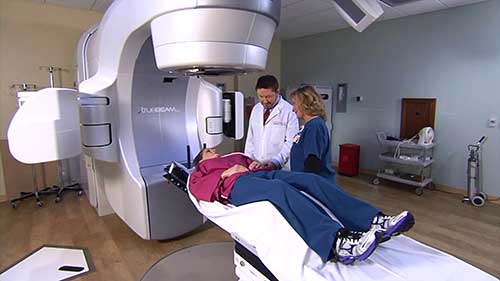
During your actual radiation therapy treatment, you will lie on the treatment table without moving. A radiation technologist will administer the treatment prescribed by the radiation oncologist. The treatment will last only a few minutes, and you may see flashes of light or smell an odor during that time. You may also hear a noise from the treatment unit. If you undergo stereotactic radiosurgery, you may wear a rigid head frame. In this procedure, a CT or MRI scan will help the doctor pinpoint tumor location, and a computer will regulate the needed radiation dose. The doctor may take multiple images on the treatment machine to ensure everything is well aligned.
Treatment planning sessions and your first radiation therapy treatments may take up to an hour. After that, treatments will usually last a few minutes and you will be in and out of the radiation department in 30 to 45 minutes for each session. Typically, treatments are given once a day, three to five days a week, for five to seven weeks. Treatments are usually not given on weekends. Stereotactic radiosurgery or stereotactic radiotherapy treatments typically last longer but consist of fewer total treatments (commonly 5 or fewer treatments).
For more information about specific radiation therapy procedures and equipment, visit the following pages:
What are possible side effects of radiation therapy?
The side effects of radiation therapy to the brain may not occur until two to three weeks after the start of your therapy. Many people experience hair loss, but the amount varies from person to person. Hair may grow back once therapy is finished.
Skin irritation is the second most frequently reported side effect. The skin around your ears and scalp may become dry, itchy, red, or tender. Do not try to treat this side effect on your own. Seek professional medical treatment as soon as it occurs. Fatigue is another possible side effect. The best way to fight fatigue is to get on a daily exercise regimen that is tolerable and sustainable, eat a healthy diet, and rely on friends and family for support. Your normal energy levels should return about six weeks after you finish your therapy. Fatigue may be the worst two to three weeks after you complete prolonged (multi-week) radiation treatment.
Edema (swelling of the brain) is also a common side effect. Tell your oncologist if you have a headache or a feeling of pressure. The doctor may prescribe medications to help reduce brain swelling, prevent seizures, or control pain. If you receive chemotherapy and radiation therapy at the same time, you may experience more severe side effects. Your doctor can suggest ways to ease these symptoms.
Other possible side effects include:
- hearing problems
- nausea
- vomiting
- loss of appetite
- memory or speech problems
- headaches
What are some of the possible risks or complications?
Radiation is a powerful weapon against cancer cells, but sometimes it kills healthy brain tissue as well. This severe side effect is called radiation necrosis. Necrosis (a late effect of high doses of radiation) can cause headaches, seizures, or even death in a small number of cases. This can occur six months to a few years after treatment. However, there is less risk of necrosis today because of newer, targeted radiation therapies and the emergence of powerful imaging, brain mapping and information technologies.
Other complications include:
- neurologic deficits (this usually depends on the area of the brain being treated)
- cognitive problems
- seizures
- headaches
- return of tumor growth
In children, radiation may damage the pituitary gland and other parts of the brain. This could cause learning problems or slow growth and development. Additionally, radiation during childhood increases the risk of developing tumors later in life. Researchers are studying chemotherapy as an alternative to radiation therapy in children with brain tumors.
What kind of treatment follow-up should I expect?
Regular follow-up treatment is extremely important after brain tumor treatment. Besides regular physical and neurological exams and blood tests, you may need periodic MRI, MR spectroscopy, perfusion or diffusion MRI, and/or CT exams. Doctors rarely use positron emission tomography (PET) scans in brain tumor patients. However, they may use PET to monitor disease outside of the brain (extracranial disease). Your doctor may also recommend home care, occupational or vocational therapy, pain management, physical therapy, and participation in support groups.
This follow-up care will help your doctor to:
- spot any sign that the tumor is returning
- monitor the health of your brain
- identify and treat the side effects of chemotherapy or radiation therapy
- detect the presence of other types of cancer at the earliest possible stage
Are there any new developments in treating my disease?
Over the past decade, improvements in fractionated and stereotactic radiotherapy have improved survival rates and quality of life for brain tumor patients. A few experimental drugs and therapies also show promise in clinical trials, including:
- Immunotherapy promotes the immune response against tumor antigens (tumor substances/molecules that trigger the immune system). There are many different types of immunotherapy approved for use; many others are still undergoing clinical trial.
- New classes of biological agents targeted against various aspects of tumor cell signaling or metabolism.
- Enhanced drug delivery methods (e.g. convection-enhanced delivery) are undergoing clinical trials.
- Emerging re-irradiation (repeated administration of radiotherapy) treatment protocols for recurrent brain tumors are now available (e.g., re-irradiation with bevacizumab – a drug that interferes with blood vessel growth in tumors) for glioblastoma). Radiofrequency tumor treating fields (TTF) are now available to treat glioblastoma. This treatment sends mild electrical fields into the tumor and disrupts the cancer cells’ ability to grow and divide. Electrodes placed on the scalp deliver the electrical fields to the tumor. A radiofrequency generator with a battery backpack power the fields. This treatment does not use radiation. While it may be of value, it does require significant commitment to wear a treatment apparatus throughout the day and at night. This may be a significant lifestyle modification.
Clinical Trials
For information and resources about clinical trials and to learn about current clinical trials underway, see:
- RadiologyInfo's Clinical Trials page.
- Clinical Trials - from the National Cancer Institute web site
Additional Information and Resources
RTAnswers.org: Radiation Therapy for Brain Cancer