Last reviewed on May 01, 2024
External Beam Therapy (EBT)
What is external beam therapy and how is it used?
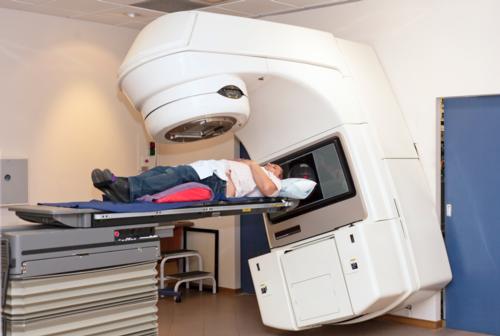
External beam therapy (EBT) is the delivery of high-energy x-rays or electron beams, generated by a machine known as the linear accelerator. Radiation oncologists will work on a personalized radiation plan by mapping out the areas requiring treatment and aiming these high-energy beams to destroy cancer cells, while sparing surrounding normal tissues. Radiation therapy can be curative, as an addition to surgery or chemotherapy, or it can provide relief from pain caused by the tumor.
To prepare for EBT, you will need to consult with a radiation oncologist to determine whether the type of cancer and stage you have will require radiation therapy. This includes reviewing your medical history, labs, imaging, physical exam, and having a discussion with you and the team of specialists involved in your care regarding the management plan. The doctor will then give you specific instructions based on the treatment technique they will use.
Doctors use EBT in:
- Breast Cancer Treatment
- Colorectal (Bowel) Cancer Treatment
- Esophageal Cancer Treatment
- Head and Neck Cancer Treatment
- Lung Cancer Treatment
- Prostate Cancer Treatment
- Brain Tumor Treatment
Why is this procedure performed?
Doctors commonly use EBT to treat cancer. Often, the goal is to eliminate a tumor or prevent a tumor from returning. You may receive EBT before or after surgery to:
- remove a cancerous tumor
- reduce the tumor size before surgery, or
- prevent the tumor from coming back after surgery.
Doctors may also use EBT to relieve pain in patients with advanced stage cancer or cancer that has spread (metastasized). In this case, the goal of therapy is to reduce a patient’s symptoms rather than cure the cancer.
Who will be involved in this procedure?
EBT delivery requires a treatment team, including a radiation oncologist, medical physicist, dosimetrist, and radiation therapist. The radiation oncologist evaluates the patient and decides on the appropriate therapy. They will determine which areas require treatment and the total dose they will deliver. Working closely with the medical physicist and the dosimetrist, the radiation oncologist determines which technique is optimal to deliver the prescribed dose. The physicist and the dosimetrist will then make detailed treatment calculations and quality assurance checks to ensure that the planned radiation will be administered accurately and safely prior to treating the patient. Radiation therapists will also get involved when you get your radiation. These are specially trained technologists who assist in setup and delivery of the daily treatments.
What equipment is used?
Radiation oncologists use linear accelerators or cobalt machines to deliver EBT. Your radiation oncologist will determine the equipment best suited to your treatment. EBT most commonly uses a linear accelerator. A radiation therapist will operate the equipment. The radiation oncologist, a highly trained doctor who specializes in treating cancer with radiation therapy, will create and oversee the overall treatment plan.
Is there any special preparation needed for the procedure?
EBT involves:
- simulation
- treatment planning
- treatment delivery
Simulation is a session dedicated to determining the position you will need to be in for the treatments. This visit is scheduled prior to starting radiation. Depending on which area of the body will receive radiation, there are various devices (masks, pads) which can help to immobilize your body so that there is very minimal motion. This ensures that the radiation will be delivered safely and accurately on a day-to-day basis. Once the optimal position is determined, the therapists may make small markings on your skin to help them reproduce your treatment position. These marks may be tattoos or colored ink. The tattoos will be permanent, but the colored ink will eventually fade. The doctor may also place marker seeds in the target tumor or organ during a separate procedure. These seeds or markings help the radiation therapist correctly position you for each treatment session. Photos of the positioning will be taken for reference. You will then have a computed tomography (CT) scan done in this setup. The CT is for the radiation oncologist to use for radiation planning purposes.
For treatment planning, the dosimetrist, medical physicist, and radiation oncologist work together and use a special computer program to create your plan. The radiation oncologist will determine the volume of the tumor and other treatment areas and outline them on the CT images acquired during simulation. They will also outline normal organs or nearby structures so they can calculate the radiation dose they will deliver to your tumor and the surrounding normal tissue. As a team, the oncologist, dosimetrist, and physicist will select the most optimal plan which delivers the appropriate dose to the tumor while sparing surrounding normal tissues. In certain cases, this process may employ techniques such as three-dimensional conformal therapy, intensity-modulated radiation therapy (IMRT), or volumetric modulated arc therapy (VMAT). This planning is based on CT, MRI, and PET/CT scans.
Once simulation and planning are complete, treatment can begin.
How is the procedure performed?
Before each treatment session, you may need to change into a gown, depending on which area of the body is to be treated. The radiation therapist will assist you onto the linear accelerator’s treatment bed. The therapist will use the same immobilization devices to replicate the position you were in for your simulation. They will use the alignment lasers and any marks placed on you during simulation to assist with this process. The accuracy of your position will be verified with imaging prior to the treatment delivery. This may include x-rays, ultrasound, or cone beam CT. The therapist goes outside the room and turns on the linear accelerator from outside.
The treatment process can take one hour or less each day. Most of this time is spent positioning and imaging the patient to ensure accuracy. The first treatment usually takes the longest as the radiation oncologist compares the position and imaging with the simulation and approves it. Subsequent treatments take between 15 and 30 minutes. The actual time in which the linear accelerator is delivering the radiation may last only several minutes; however, the total treatment time depends on the method of delivery, such as IMRT, the size of the area being treated, and the dose given. Treatment may use beams from one or more directions, and the beam may be on for as long as several minutes for each field. Each treatment will usually take the same amount of time.
Patients usually receive radiation treatments once a day, five days a week for a total of two to nine weeks. Your diagnosis will determine how long you receive treatment. Occasionally, you may receive treatment twice a day or every other day.
What will I feel during this procedure?
External beam therapy is painless; patients will hear buzzing or clicking noises during treatment, which is from the linear accelerator rotating or moving during treatment. Patients feel nothing out of the ordinary but may sometimes smell the ozone produced by the linear accelerator. Some patients may also see a colored light when they receive their treatment. This is especially true for patients who are receiving treatment for their brain or eyes.
What kind of treatment follow-up should I expect?
Once all treatments are complete, patients should continue to follow up with their radiation oncologist regularly. These visits will assess recovery from radiation side effects, tumor response to the treatment and surveillance with imaging/blood tests to ensure that the cancer has not come back. The doctor will explain how long the follow-ups will continue, based on the type of cancer and treatment given.
Additional Information and Resources
RTAnswers.org: External Beam Radiation Therapy